
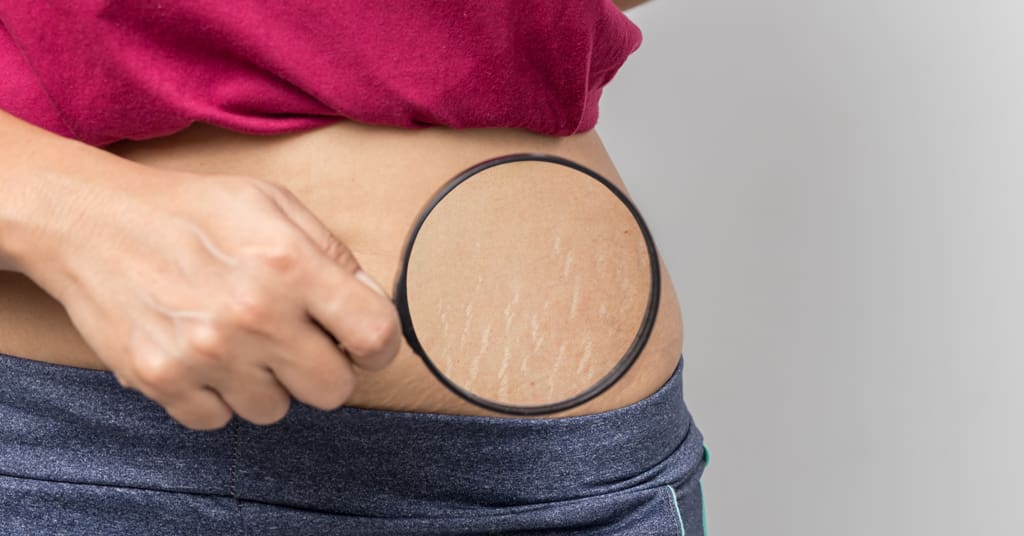
Stretch marks are a common skin condition that many of us experience, yet there are still plenty of misconceptions about them. From pregnancy to weight changes, stretch marks can appear due to several reasons.
They can affect people of all body types and ages, making them a universal concern, yet there are still plenty of misconceptions about them.
In this blog, we’ll unravel the myths and explain the facts more clearly about what is the truth about stretch marks.
Highlights
- What Are Stretch Marks?
- What is the Science Behind Stretch Marks?
- Debunking Common Myths About Stretch Marks
- How to Prevent Stretch Marks?
- How to Get Rid of Stretch Marks?
- Takeaway
- FAQs
What Are Stretch Marks?
Stretch marks (or striae) are those little scars that pop up when your skin stretches too quickly. They can appear when you gain or lose weight fast, or even from certain medications like corticosteroids.
You’ll most often see them on areas like your stomach, thighs, butt, and back. They come in all kinds of colors like red, purple, white, or even black, depending on how fresh they are.
While stretch marks can be a bit of a worry for some, they’re totally normal and a part of your skin’s natural changes. Whether they’re from pregnancy or a quick change in weight, there’s no need to stress.
What Is the Science Behind Stretch Marks?
On a deeper level, proteins like fibrillin and collagen play a big role in keeping your skin elastic and strong. When these proteins are in short supply or not working as they should, your skin’s ability to stretch without tearing weakens.
Genetics might also influence how much collagen or fibronectin your skin produces, making some people more prone to stretch marks than others.
Debunking Common Myths About Stretch Marks
There are many myths about stretch marks that can lead to confusion. Let’s discuss them:
Myth #1: Stretch Marks Can Be Completely Prevented
False: While there are ways to reduce the risk of developing stretch marks, complete prevention is not always possible. Genetics, hormones, and rapid skin changes (such as pregnancy or weight fluctuations) play a significant role.
Certain measures like moisturizing or using specific creams may help, but they cannot guarantee prevention.
Myth #2: Only Overweight People Get Stretch Marks
False: Stretch marks are not exclusive to overweight individuals. People of all body types, including thin individuals, can develop stretch marks. This is because stretch marks are caused by rapid skin stretching, which can occur due to pregnancy, growth spurts, muscle building, or hormonal changes, not just weight gain.
Myth #3: Stretch Marks Only Appear on the Belly
False: While stretch marks are commonly seen on the belly during pregnancy, they can appear on various parts of the body, including the thighs, hips, breasts, arms, and even the back. Any area of the skin that experiences rapid stretching can be affected by stretch marks.
Myth #4: Stretch Marks Go Away After Losing Weight
False: Losing weight may make stretch marks less noticeable, but they typically don’t completely disappear. Stretch marks may lighten with time but remain as scars on the skin. The colour of the marks may change from red or purple to white, but they do not completely vanish.
Myth #5: Stretch Marks Indicate Bad Health
False: Stretch marks are a common skin condition and are not an indicator of bad health. They are caused by rapid changes in the skin, such as growth spurts, pregnancy, or weight fluctuations. They are entirely natural and don’t reflect any underlying health problems.
Myth #6: Stretch Marks Are Always Itchy
False: Stretch marks can be itchy when they first appear, especially as the skin stretches. However, not all stretch marks are itchy. Over time, they typically stop itching and become less noticeable as they fade.
Myth #7: Tanning Can Help Cover Up Stretch Marks
False: Tanning does not ‘cure’ stretch marks. In fact, when you tan, stretch marks can become more prominent because they don’t tan like the surrounding skin.
While a self-tanner won’t remove stretch marks, it can help to disguise them, making both new and older marks less noticeable. However, it’s important to note that self-tanners do not provide a permanent solution for stretch marks.
Myth #8: Stretch Marks Are Only Found on Women
False: Men can get stretch marks too, particularly during periods of rapid weight gain, puberty, or muscle building. Stretch marks are not gender-specific and can affect anyone who experiences rapid skin stretching.
How to Prevent Stretch Marks?
While you can’t always prevent stretch marks, here are some tips to minimize their appearance:
- Moisturize regularly to keep the skin hydrated and improve elasticity.
- Use topical treatments like creams containing hyaluronic acid or retinoids to help reduce their appearance.
- Maintain a healthy weight to prevent sudden weight gain or loss, which can trigger stretch marks.
- Stay hydrated to support the skin’s natural elasticity.
How to Get Rid of Stretch Marks?

There are several treatments available to help reduce the appearance of stretch marks:
- Topical anti-stretch- mark creams can promote collagen production and reduce the appearance of stretch marks.
- Massage has also been used as an additional treatment.
- Laser therapy can stimulate skin regeneration and reduce the colour of stretch marks.
- Chemical peels can enhance the appearance of skin tone and texture.
While these treatments can help, it’s important to remember that stretch marks may not ever completely disappear.
Takeaway
Stretch marks are a common occurrence, and there’s no need to feel ashamed of them.
Whether you want to prevent or treat them, there are steps you can take to improve the appearance of your skin
By understanding the myths versus the facts, you can approach stretch marks with a clear perspective.
Embrace your body, knowing that stretch marks are simply a sign of growth and change.
FAQs
Do stretch marks go away if you lose weight?
Losing weight may make stretch marks less noticeable, though they usually do not disappear entirely. While the marks may fade and become less prominent over time, they usually remain as scars on the skin.
Is it normal for a skinny girl to have stretch marks?
Anyone can develop stretch marks, regardless of body type. Factors like rapid growth, hormonal fluctuations, and genetics are crucial in their development. Even those with low body fat may experience them.
How to remove stretch marks permanently?
There is no guaranteed permanent removal for stretch marks, but treatments like laser therapy, topical creams, and microdermabrasion can help reduce their appearance. Consistent care can improve their visibility over time.
Can tight clothes cause stretch marks?
Tight clothes alone don’t directly cause stretch marks, but they can contribute to skin irritation or discomfort, which may exacerbate the risk if the skin is already prone to stretching. However, stretch marks are typically caused by rapid changes in skin size due to growth, weight gain, or hormonal shifts, rather than tight clothing.
Can you get stretch marks in one day?
Stretch marks typically form over a period of time, not in just one day. However, rapid changes like sudden weight gain or growth can lead to stretch marks developing quickly. The appearance of stretch marks might seem sudden, but they are a result of ongoing stress on the skin over a short period, not an immediate event.