

If you’ve ever been caught in an unexpected itch-fest during a busy day or had to fight off the overwhelming urge to scratch your skin in public, you know how frustrating and distracting it can be. Now imagine that itch intensifying at night, becoming unbearable, and spreading across your skin. For some, this could be the start of something more serious than just an annoying moment – it could be scabies.
Scabies is one of those skin conditions that we don’t talk about much, but it’s something we should definitely know about! So, let’s break it down—what exactly is scabies, how do you catch it, and how can you get rid of it?
Highlights
- What is Scabies?
- How Do You Get Scabies?
- Where Do the Mites Live?
- Symptoms to Watch For
- How to Get Rid of Scabies?
- When to See a Doctor?
- Can Scabies Be Prevented?
- The Bottom Line
- FAQs
What is Scabies?
Scabies is a highly contagious skin condition triggered by eight-legged mites known as Sarcoptes scabiei. These critters are super tiny (you can’t even spot them without a microscope).

They burrow under your skin, laying eggs, and causing intense itching and inflammation. While the word “mite” might sound a bit creepy, don’t worry—scabies isn’t about poor hygiene! Anyone, regardless of how clean they are, can catch it. So, if you do find yourself with scabies, it’s not a reflection of your cleanliness—it’s just a result of contact with someone carrying those little pesky mites.
How Do You Get Scabies?
Well, scabies spreads through close physical contact. So, if you’re chilling out with someone who has it, you are highly prone to catch it. The mites are passed through extended skin-to-skin contact or indirectly by coming into contact with contaminated items (fomites). You are at risk if you’ve hugged or even just shaken hands with someone who has scabies.
But that’s not all! Scabies can sneak onto shared items like towels, clothes, and bed linens. If someone in your home has scabies, be sure to wash these items thoroughly.
Where Do the Mites Live?
Scabies mites can hang out anywhere on your skin, but they have some favourite spots like:
- Hands and feet (especially between the toes and fingers)
- Skin folds around your wrists, elbows, and knees
- Armpits
- Around nipples (especially in women)
- Waist
- Groin and genital area
- Lower buttocks and upper thighs
Usually, the back and head are off-limits for scabies—except in infants or young children, where the scalp can sometimes become a target.
Symptoms to Watch For
Okay, now let’s talk about the real pain of scabies: the symptoms. Scabies can be a sneaky culprit—it doesn’t reveal itself right away. In fact, scabies symptoms might take 4 to 6 weeks to appear after the initial exposure.
That’s why staying vigilant for early signs is key to catching it before it spreads. Wondering how to identify scabies? Here are the most common symptoms to watch for:
1. Intense Itching

Itching is the number one sign that you might have scabies, and trust us, it’s not just any itch—it’s intense! The worst part? It usually gets worse at night, making it extremely difficult to sleep well. It’s your body’s way of responding to those tiny mites burrowing into your skin and laying eggs—pretty annoying, right?
2. Rashes
Tiny, red bumps or blisters start popping up on your skin, marking the spots where those pesky mites have burrowed in. At first glance, they might look like insect bites, but the itchiness that comes with them is next-level. The scabies rash tends to show up in spots like webbing between your fingers, wrists, elbows, knees, waist, and even your genital area.
3. Burrows
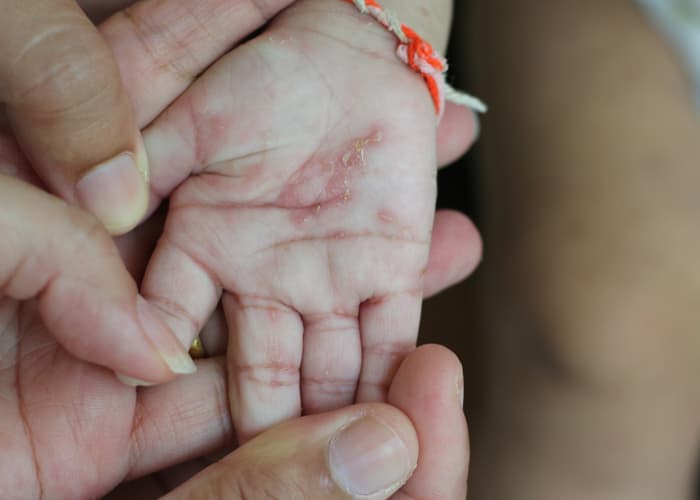
If you take a closer look, you might spot tiny, thread-like lines or tunnels on your skin. These are called burrows, created by mites as they dig their way under your skin.
4. Blisters and Sores

Constantly scratching to ease the itch can create open sores, making it easier for bacterial infections to sneak in. And when that occurs, the problem can escalate. That’s why it’s super important to try and resist the urge to scratch—it’ll make things more worse!
5. Crusted Scabies
In more severe cases, early scabies can develop into what’s called “crusted scabies” or “Norwegian scabies.” This form is way more contagious and comes with thick crusts of dead skin, packed with thousands of mites and their eggs. It’s most common in people with weakened immune systems, like those with HIV or older adults, which makes catching it early even more crucial.
How to Get Rid of Scabies?
Scabies may sound alarming, but here’s the good news: it’s treatable! Here are the most common scabies treatment options to guide you on your recovery journey:
1. Topical Medications

The go-to treatment for scabies is usually a prescription cream, lotion, or soap that contains permethrin. It’s super easy to use—just apply permethrin cream or lotion all over your body (from the neck down) and leave it on for 8–12 hours, usually overnight. It kills the mites and their eggs, and you’ll start feeling better in just a few days. To use permethrin soap, lather it over the affected areas, leave it on for a few minutes, and then rinse off.
Alternatives like benzyl benzoate, crotamiton, lindane, 5% precipitated sulfur, malathion, and topical ivermectin are also useful for easing discomfort. Even though the mites are being wiped out, the itching can stick around for a few weeks due to your body’s immune response. Itching can drive you crazy, but don’t worry—over-the-counter hydrocortisone creams, antihistamines, soothing lotions like calamine lotion can offer some much-needed relief while your skin heals.
2. Oral Medications
Oral ivermectin is one of the most popular medications for scabies. It’s an antiparasitic that works wonders by killing the pesky mites that cause all that itchiness. The best part? It’s usually taken in just one dose, though sometimes you might need a second one after a week or so. Super easy, right?
3. Home Remedies
Here are some soothing home remedies to help ease the discomfort of scabies:
- Tea Tree Oil & Neem Oil: These oils are rich in antibacterial properties and can help calm irritated skin, providing natural relief from itching.
- Aloe Vera & Coconut Oil: Both offer cooling and moisturizing effects, helping to soothe the skin and reduce discomfort.
- Oatmeal Bath: An oatmeal bath can help soothe the itchy and irritated skin. Just pour colloidal oatmeal or finely ground oats to warm bathwater. Soak for 15-20 minutes.
- Baking Soda Paste: Blend baking soda and water into a paste. Apply it to affected areas, let it dry, and rinse off gently for instant soothing relief.
These simple tips for scabies home treatment can provide comfort. But, if symptoms persist, seek professional medical advice.
When to See a Doctor?
If you think you have scabies, don’t wait—seek medical care right immediately. Your doctor will:
- Examine the rash and burrows visually.
- Carry out a skin scraping to check for mites, fecal matter, or eggs under a microscope.
Getting the right diagnosis is crucial, since other skin conditions like eczema, hives, or allergies can have similar symptoms. Once scabies is confirmed, treatment can start right away, and your dermatologist will guide you on the best way to tackle it.
Can Scabies Be Prevented?
While scabies is distressing and can’t always be completely avoided, there are some preventive measures you can take to reduce your risk:
- Avoid close skin-to-skin contact with anyone who has scabies.
- Refrain from sharing personal items such as towels, clothing, or bed linens.
- To prevent re-infestation, it’s super important to wash all your clothes, bed linens, and towels in hot water. Dry them on high heat.
- Maintain good hygiene by washing your hands frequently and showering regularly, especially if you’ve been around someone infected with scabies.
- For things that can’t be washed, just pop them in a plastic bag for at least 72 hours—this will make sure any leftover mites are gone for good. Keep your environment clean, and you’ll be one step closer to full recovery!
The Bottom Line
Scabies caused by tiny mites might sound scary, but it’s totally manageable. So, the next time you feel an itchy spot creeping up on your skin, keep in mind —it could be scabies. It’s not about poor hygiene, so there’s no need to feel embarrassed. Just remember to take care of yourself, and don’t hesitate to seek advice from a professional if you suspect something’s off. Stay itch-free and take good care of your skin!
FAQs
1. What causes scabies?
Scabies is caused by tiny mites called Sarcoptes scabiei. These mites are so small (around 0.3 mm in diameter) that you can’t even see them with the naked eye. Once the mites are on your skin, they lay eggs, which hatch and keep spreading the infestation. That constant cycle of the mites burrowing and laying eggs is what causes all the itching!
2. What does scabies look like?
Scabies often looks like a red, bumpy rash with tiny blisters or sores. You might notice little scaly patches or even tiny lines under your skin —those are actually the mites’ burrows. It usually starts in places like between your fingers, around your wrists, elbows, knees, and even your waist. Intense itching, particularly at night, is one of the most noticeable symptoms!
3. Is scabies contagious?
Yes, scabies is contagious and can spread really easily. It’s caused by super tiny mites that burrow into your skin. You can get scabies through close skin-to-skin contact, like hugging or shaking hands, or by sharing personal items like towels or clothes. So, if you’ve been around someone with scabies, it’s a good idea to keep an eye out for symptoms!
4. How to treat scabies?
If you’re dealing with scabies, don’t worry—treatment is simple! The go-to options are topical creams like permethrin or benzyl benzoate — they wipe out the mites and offer the much-needed itch relief. For more stubborn cases, oral medicines like ivermectin might be necessary. You’ll also need to wash your clothes, towels, and bedding in hot water or seal them in a bag for a few days to kill the mites. Try not to scratch, as it can worsen your rash and heighten risk of infection.